
One of the most important decisions when planning your Ausangate adventure is how you’ll sleep along the trail. Should you choose the traditional Ausangate trek camping experience, or opt for the growing network of Andean lodges along the route?
Each option offers unique advantages and trade-offs in terms of comfort, cost, logistics, and connection to nature. In this guide, we compare Ausangate trek camping vs lodge to help you decide which experience fits your trekking style, budget, and expectations.
Quick Overview: Camping vs Lodge
| Feature | Camping | Lodge |
|---|---|---|
| Comfort Level | Basic to comfortable (varies) | Moderate to high (room, bed, toilet) |
| Connection with Nature | Full immersion | Limited (indoors at night) |
| Weather Protection | Less (tent-dependent) | More (solid walls, insulation) |
| Cost | Lower | Higher |
| Luggage Support | Mules or porters | Partial luggage transfer included |
| Availability | Anywhere along the trail | Only in select villages (Pacchanta, Upis, Pampacancha) |
| Meals | Cooked by trekking crew | Served in dining room |
| Cultural Experience | Strong (with staff & locals) | Moderate (lodge-run or semi-private) |
The Ausangate Trek Camping Experience
What It’s Like
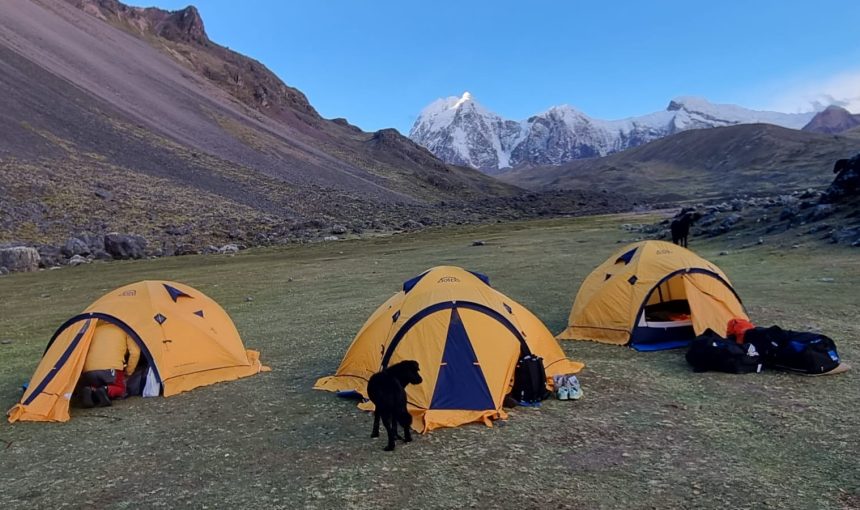
Camping on the Ausangate Trek means staying in high-mountain tents, usually set up near lakes, valleys, or glacial foothills. You’ll sleep under the stars, surrounded by silence and alpine beauty.
Pros of Camping
- Total nature immersion: Wake up next to turquoise lakes and snowcapped peaks.
- Flexible routes: Camp wherever the trail allows—more freedom in pacing.
- Closer to local traditions: Many muleteers and cooks are from local Andean communities.
- More budget-friendly: Tours that include camping tend to cost less overall.
Cons of Camping
- Cold nights: Temperatures drop below freezing—sleeping bags must be rated for -10 °C or lower.
- Basic sanitation: Portable toilet tents may be included, but no showers unless you use natural hot springs.
- Weather vulnerability: Heavy rain or wind can affect rest and safety.
- Setup and breakdown: Adds time to each day, handled by staff but still part of your rhythm.
Ideal For:
- Nature lovers
- Budget-conscious trekkers
- Photographers and wilderness campers
- Travelers looking for solitude and authenticity
The Lodge-Based Ausangate Trek
What It’s Like
A lodge trek offers beds, blankets, and solid walls at the end of each day. Lodges are rustic, built with local materials, and often located in small Andean communities like Pacchanta, Upis, or Pampacancha.
Pros of Staying in Lodges
- More comfort: Sleep in a bed, indoors, with better temperature regulation.
- Better hygiene: Some lodges have private bathrooms or shared hot showers.
- Less gear to carry: No need to bring tents, mats, or sleeping bags.
- Easier for recovery: Better rest helps the body adapt to altitude and physical effort.
Cons of Lodges
- Limited locations: Routes must be adjusted to reach lodge-based villages.
- Higher cost: Lodge-based treks often cost $150–$300 more per person.
- Less immersive: You lose the experience of sleeping directly in remote nature.
- Fewer available spots: In high season, some lodges fill quickly or are unavailable.
Ideal For:
- Trekkers who value comfort at night
- Older travelers or families
- People sensitive to cold or altitude
- Hikers wanting to avoid full camping logistics
Comfort and Sleep Quality
In terms of sleep quality, lodges clearly offer the advantage. However, modern trekking agencies also provide high-quality tents, insulated mats, and warm sleeping bags, making camping quite comfortable if weather conditions are stable.
If you’re someone who sleeps poorly in tents or struggles with cold, a lodge trek may help you enjoy the experience more fully.
If you’re someone who enjoys being disconnected and waking up to nature, camping is hard to beat.
Weather and Safety Considerations
- Camping requires stronger protection against elements.
Tent quality and thermal sleeping systems are essential. - Lodges offer better protection against wind, storms, or unexpected snow.
They’re warmer, more sheltered, and allow better recovery.
In the dry season (May–September), both are viable options.
In the rainy season, a lodge trek may reduce the risk of exposure to hypothermia or damp gear.
Logistics and Support
With both options, your tour operator typically provides:
- Meals
- Guides
- Mules or porters for your main gear
- Transportation from/to Cusco
In camping treks, the staff handles camp setup and meal preparation on the spot.
In lodge treks, meals are prepared by lodge staff, and sometimes amenities like charging stations or solar power are available.
Pricing Comparison
| Service Type | 5-Day Trek (per person) |
|---|---|
| Camping Trek | $480 – $600 USD |
| Lodge-Based Trek | $700 – $850 USD |
| Luxury Lodge Trek* | $1,000+ USD |
*Luxury options may include hot tubs, private rooms, gourmet food, or dedicated staff.
Can You Combine Both? Hybrid Treks
Yes. Some tour operators, like The Ausangate Trek, offer hybrid itineraries:
- Camp in remote sections (e.g., Lake Ausangate, Rainbow Mountain approach)
- Stay in a lodge the first or last night (e.g., Pacchanta Hot Springs)
This provides the best of both worlds—comfort when it counts, and nature immersion when it matters.