
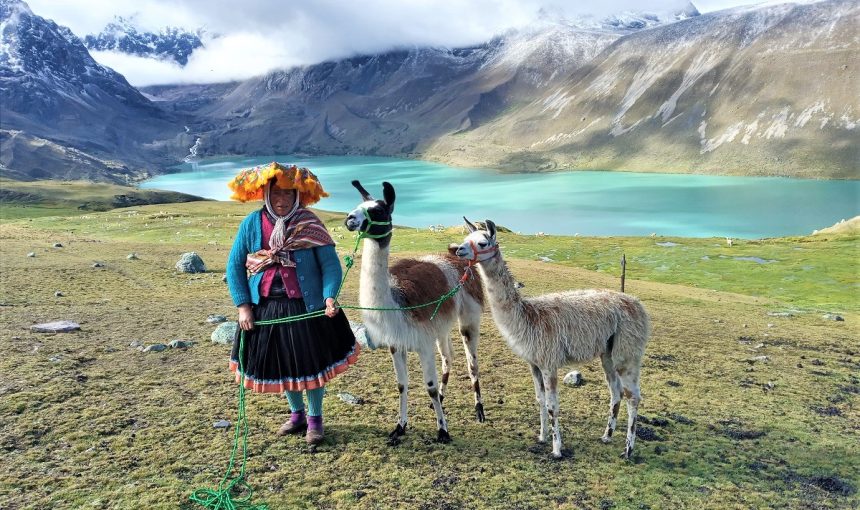
The wildlife in Ausangate trek is as spectacular as its world-famous landscapes. Located in the remote Vilcanota Mountain Range of southern Peru, this high-altitude adventure takes you through environments where nature still thrives in its purest form. Trekkers encounter alpacas grazing in open puna grasslands, elusive vizcachas resting on rocky outcrops, and condors gliding over turquoise lakes fed by ancient glaciers. Every step on the Ausangate Trek offers a new glimpse of life adapted to extreme altitudes, making it a must for wildlife lovers and nature photographers.
Alpacas: Symbols of the Andean Highlands
Alpacas are perhaps the most recognizable animals in the wildlife in Ausangate trek, embodying the spirit and resilience of the Andean highlands. Domesticated by ancient Andean civilizations over 6,000 years ago, they have played an essential role in the survival and culture of high-altitude communities. Their warm, soft fleece—highly prized worldwide—is both a symbol of Andean craftsmanship and a vital economic resource for local families.
As you walk along the Ausangate trails, you’ll often spot herds of alpacas grazing in open puna grasslands, sometimes accompanied by llamas for protection. Their calm nature makes them approachable for photographs, though it’s best to keep a respectful distance. The thick fiber of their coat is perfectly adapted to withstand extreme conditions, such as freezing nights that can dip well below zero and intense daytime sun at elevations above 4,000 meters.
More about their importance:
- Economic pillar: Alpaca fiber is one of the main exports from rural Andean regions, used to produce high-quality garments sold internationally.
- Cultural heritage: In Quechua traditions, alpacas are often part of festivals and rituals, symbolizing prosperity and harmony with nature.
- Environmental adaptability: They graze selectively and have padded feet, which causes less soil erosion compared to hoofed animals, making them a sustainable livestock option.
Quick facts:
- Height: Approximately 90 cm at the shoulder
- Lifespan: 15–20 years
- Diet: High-altitude grasses, herbs, and native shrubs
- Cultural role: Source of premium textile fiber and occasional meat for local consumption
For trekkers, encountering alpacas on the wildlife in Ausangate trek is more than just a photo opportunity—it’s a connection to the cultural and environmental fabric of the Andes. Their presence enriches the journey, offering a living link between ancient traditions and modern-day livelihoods.

Vizcachas: Agile Rock-Dwellers of the High Andes
The vizcacha is one of the most charming and elusive members of the wildlife in Ausangate trek, captivating hikers with its unique appearance and quick, agile movements. Resembling a large rabbit but actually related to chinchillas, this rodent is easily recognized by its rounded body, large whiskers, and notably long, bushy tail.
Adapted to the rocky, high-altitude environments of the Andes, vizcachas are masters of camouflage. Their fur blends perfectly with the granite and slate hues of the mountain slopes, making them almost invisible until they move. They are most active during the morning and late afternoon, often seen sunbathing on boulders to warm themselves after cold nights.
Behavior and lifestyle:
- Habitat: Rocky outcrops, cliffs, and boulder fields between 3,000 and 5,000 meters above sea level.
- Social structure: They live in small family groups, using the same sunning spots and hiding places for generations.
- Feeding habits: Primarily herbivorous, feeding on hardy grasses, lichens, and shrubs that grow in the puna ecosystem.
Despite their shy nature, vizcachas are curious animals and may watch trekkers from a distance before disappearing into crevices with a lightning-fast leap. Observing them in their natural habitat adds a special moment to the wildlife in Ausangate trek, especially for nature photographers seeking unique Andean fauna.
Spotting tips:
- Look near sunny rock faces in the early morning, when they emerge to bask in the warmth.
- Move slowly and remain quiet to avoid startling them.
- Bring binoculars or a zoom lens for close-up shots without disturbing their routine.
Seeing a vizcacha perched on a high rock, silhouetted against the backdrop of Ausangate’s snow-capped peaks, is a reminder of the resilience and adaptability of life in one of the planet’s most extreme environments.
Birdlife: Masters of the Andean Skies
The highlands of Ausangate are home to an impressive range of bird species. The Andean condor is the most iconic, with a wingspan of up to 3 meters. Other birds seen along the wildlife in Ausangate trek include:
- Crested caracaras
- Mountain tanagers
- Giant hummingbirds
- Puna ibis
Their presence adds vibrant colors and movement to the otherwise serene landscapes.
Glaciers: Frozen Giants of the Andes
Glaciers are more than just scenic backdrops—they are life sources for both people and wildlife. The Ausangate Glacier and others like Jampa Glacier feed streams and lakes that sustain the fauna of the region. As you follow the wildlife in Ausangate trek, these icy giants will frame many of your most memorable wildlife sightings.
Turquoise Lakes: Nature’s High-Altitude Mirrors
The wildlife in Ausangate trek would not be complete without its spectacular high-Andean lakes, whose vivid turquoise, emerald, and deep blue colors captivate trekkers at every turn. Formed by glacial meltwater rich in minerals, these lakes are more than scenic wonders—they are lifelines for local wildlife, attracting waterfowl, camelids, and other species seeking hydration in the thin, dry air of the Andes.
Aside from being wildlife hubs, these lakes are also natural mirrors, reflecting surrounding snow-capped peaks and shifting their hues throughout the day depending on light and weather. For photographers, they offer endless opportunities for composition and creativity.
Ausangate Lake
One of the largest and most iconic lakes on the route, Ausangate Lake sits directly below the towering Nevado Ausangate. Its waters shimmer with varying shades of blue, reflecting both glaciers and rocky ridges. Waterfowl such as the Andean goose and puna teal are often spotted here, and its shores serve as grazing grounds for alpacas and llamas.
Pucacocha Lake
Known for its striking reddish tones in the surrounding terrain (from which it gets its name “red lake”), Pucacocha Lake offers a peaceful setting framed by jagged peaks. This is an excellent stop for observing smaller bird species and for taking panoramic photos that combine lake, mountain, and sky in one shot.
Q’omercocha Lake
Translating to “green lake” in Quechua, Q’omercocha Lake stands out for its deep emerald color, caused by unique mineral compositions in the water. Its remote location means fewer visitors, making it a perfect spot for quiet reflection and close observation of shy species such as the puna ibis or Andean lapwing.
Collectively, these lakes add to the immersive experience of the wildlife in Ausangate trek. They are not just visual highlights but also ecological treasures, sustaining life in a challenging, high-altitude environment. Trekkers who take the time to pause by their shores will witness a tranquil side of the Andes, where wildlife and landscapes exist in perfect harmony.

Towering Peaks: The Majestic Backdrop
ThThe wildlife in Ausangate trek is framed by a breathtaking skyline dominated by some of the most iconic mountains in the Peruvian Andes. These peaks are not just spectacular landmarks—they are the very architects of the region’s ecosystems, influencing wind patterns, precipitation, and temperature, and in turn shaping the habitats where wildlife thrives.
Nevado Ausangate (6,384 m)
The highest mountain in southern Peru and a sacred Apu in Quechua tradition, Nevado Ausangate towers over the trek with its imposing glaciers and sheer rock faces. It is the source of countless streams and lakes that sustain both wildlife and local communities. Its slopes and valleys host alpacas, vizcachas, and Andean foxes, while condors often soar above its ridgelines.
Nevado Jampa
Known for its accessible climbing routes and proximity to high mountain passes, Nevado Jampa offers a unique vantage point over the surrounding valleys. The mountain’s glaciers feed into turquoise lakes that attract Andean waterfowl, making it a key wildlife viewing area along the trek.
Nevado Mariposa
Named for its butterfly-shaped summit ridge, Nevado Mariposa is less visited but equally striking. Its rugged cliffs provide shelter for nesting birds of prey, while its lower slopes offer grazing grounds for herds of alpacas and llamas.
These mountains act as natural weather barriers, creating microclimates that allow diverse species to flourish. Trekkers on the wildlife in Ausangate trek not only enjoy spectacular views but also experience firsthand how the Andes’ geological features directly sustain life at high altitudes. From icy summits to fertile valleys, the peaks are both the backdrop and the lifeline of this extraordinary ecosystem.
How Wildlife Shapes the Trekking Experience
What makes the wildlife in Ausangate trek truly unique is the seamless way in which nature and landscape merge, transforming the journey into a living outdoor museum. Every step reveals a scene where wild animals are not just occasional sightings but active participants in the environment. Alpacas graze freely under the watchful gaze of snow-capped peaks, vizcachas leap effortlessly across boulders, and Andean condors ride thermal currents high above turquoise lakes.
This constant interaction between fauna and scenery creates a rhythm to the trek. Early mornings are marked by the sounds of bird calls echoing across the valleys, while afternoons bring the sight of herds moving slowly to fresh grazing grounds. Even moments of rest become opportunities to observe nature, whether it’s spotting waterfowl gliding across a still lake or watching clouds cast shifting shadows over glacier-fed slopes.
The wildlife in Ausangate trek also shapes the emotional experience of hikers. Encounters with animals in their natural habitat create a sense of connection and respect for the Andes, reminding trekkers that they are guests in a delicate, high-altitude ecosystem. The unpredictability of wildlife sightings adds an element of excitement to each day—every bend in the trail could bring a new surprise, from a condor’s sudden appearance to the flash of a giant hummingbird feeding on alpine flowers.
Ultimately, the harmony between wildlife and landscape is what makes the Ausangate Trek stand out among Peru’s hiking routes. It’s not just about reaching passes or lakes—it’s about immersing yourself in a world where nature still reigns supreme, offering moments of wonder that stay with you long after you’ve left the mountains.
Best Practices for Responsible Wildlife Viewing
- Maintain distance and use zoom lenses
- Avoid feeding wild animals
- Stay on marked paths to protect fragile habitats
- Respect local herders and their alpacas
When to Visit for the Best Wildlife Encounters
The dry season (May to September) is considered the best time to experience the wildlife in Ausangate trek. During these months, the Andean highlands enjoy clearer skies, minimal rainfall, and more stable weather—conditions that make birdwatching, wildlife spotting, and photography far more rewarding.
Why the Dry Season is Ideal
- Clear visibility: With fewer clouds and reduced fog, it’s easier to spot distant animals such as Andean condors circling above or herds of alpacas grazing on the slopes.
- Better trail conditions: Dry, compact terrain reduces the risk of slipping and makes high passes more accessible, allowing trekkers to spend more time observing wildlife without rushing.
- Increased animal activity: Many species are more visible in sunny conditions, warming themselves in open areas during the morning and late afternoon.
Other Seasonal Considerations
- Shoulder seasons (April and October): These months can also be good for wildlife viewing, with fewer tourists on the trails. However, light rain showers are more likely, so be prepared with waterproof gear.
- Wet season (November to March): Wildlife is still present, but heavy rains, cloud cover, and slippery trails can make sightings and photography more challenging. On the other hand, the landscapes are lush and green, and lakes appear even more vibrant.
By planning your trek during the optimal months, you increase your chances of experiencing the wildlife in Ausangate trek at its most active and visually stunning, ensuring both comfort and unforgettable encounters.
Photography Tips for the Wildlife in Ausangate Trek
Capturing the essence of the wildlife in Ausangate trek requires more than just pointing your camera at the scenery. The changing light, fast-moving animals, and high-altitude conditions demand a thoughtful approach to photography. Whether you’re an amateur photographer or a professional, these tips will help you take memorable, high-quality images.
Take Advantage of Golden Hour
The first and last hours of sunlight—known as the golden hour—create warm, soft lighting that enhances the natural colors of animals, lakes, and peaks. This light reduces harsh shadows and adds depth to your photos, making the turquoise of the lakes and the fur of alpacas appear richer and more vibrant.
Use a Fast Shutter Speed for Birds
Birds such as the Andean condor or giant hummingbird can move quickly, and a slow shutter speed risks producing blurry images. Use a fast shutter speed (1/1000s or higher) to freeze their motion and capture the detail in their wings and feathers.
Bring a Tripod for Landscapes
High-altitude winds can make it difficult to keep your camera steady. A lightweight tripod ensures stability for long-exposure shots, especially when photographing starry skies, sunrise over the mountains, or reflections in the lakes.
Avoid Flash with Wildlife
Flash photography can startle animals, alter their natural behavior, and even cause stress. Instead, adjust your ISO and aperture to capture well-lit shots without artificial light. This is especially important when photographing sensitive species like vizcachas or nesting birds.
By following these tips, you’ll be able to document the wildlife in Ausangate trek with images that not only look beautiful but also respect the animals and landscapes that make this region so extraordinary.